
Beyond Representation

Before we start...
It’s been a while since I’ve written here.
For the past few months, I’ve been immersed in the world of Cantonese cuisine and, more specifically, the food and drink culture of Hong Kong. My days have been filled with wontons, roast meats, noodles, fish balls, cha chaan tengs, and the countless details that make a food culture feel alive.
Stepping outside the Filipino food conversation has been unexpectedly useful.
Distance has a way of revealing things that are difficult to see when you’re standing in the middle of them.
This essay is the result of that distance.
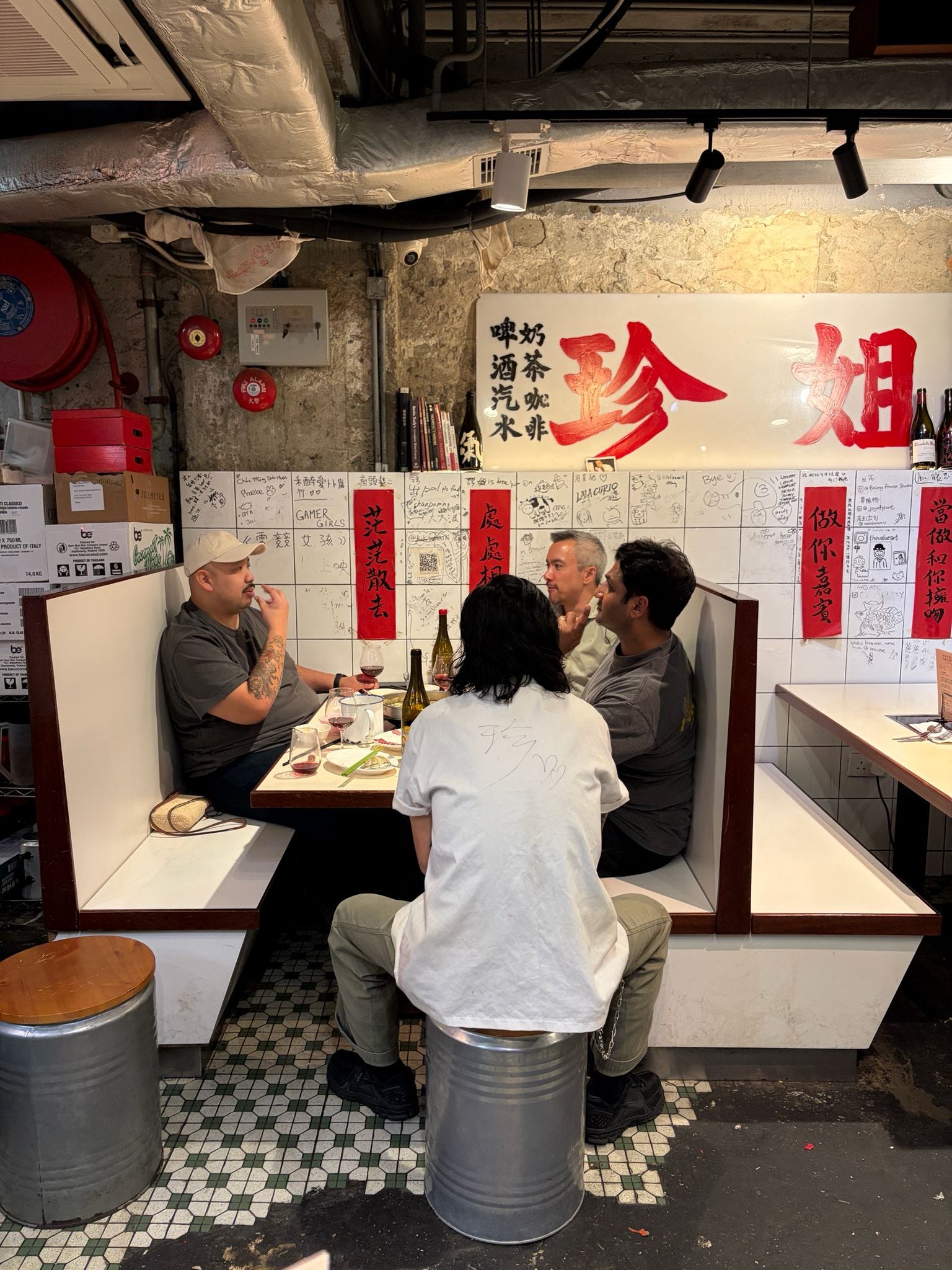
For the past few months, I’ve been learning Cantonese food.
Not abandoning Filipino food. Not moving away from it. Learning.
And strangely, spending time outside the Filipino food conversation has made me think more clearly about Filipino food itself.
Distance has a way of doing that.
When you’re immersed in something every day, it can be difficult to see its shape. You become caught up in the debates, the narratives, the questions that seem important because they’re constantly being asked.
Step away for a moment and you start noticing patterns.
One thing I’ve realised is that for much of my career cooking Filipino food, I was deeply concerned with representation.
Not because I believed I represented Filipino cuisine.
Quite the opposite.
I was conscious of how little representation existed.
When we opened Sarap, it felt important to get things right.
We were careful with language.
We spoke about representation, not elevation.
We talked about respecting tradition without being bound by it.
We described the food as authentic flavours served proudly inauthentically.
When dishes were inspired by regional traditions, we tried to acknowledge them properly. We used the names they came from. We tried to give credit where credit was due.
At the time, this felt like a responsibility.
In many ways, I still think it was.
We were navigating relatively new territory. There were Filipino restaurants before us, of course, but there were very few examples of Filipino food being presented in the spaces we wanted to occupy.
Our goal was never to convince Filipinos that our cuisine was great.
They already knew that.
I’ve said some version of that countless times over the years.
The challenge was never internal.
The challenge was visibility.
How do you take Filipino food beyond our homes, beyond family gatherings, beyond community spaces, and place it into a broader conversation without losing sight of where it came from?
How do you introduce something without reducing it?
How do you make it accessible without diluting it?
Those questions shaped much of my thinking.
Looking back, I realise they shaped more of my thinking than I probably understood at the time.
I remember feeling it most acutely during Great British Menu.
Some have credited me as the first Filipino chef to appear on the programme, but that honour belongs to Luke Selby, who not only competed but went all the way to the banquet.
What was different about my appearance was that Filipino flavours and references sat directly at the centre of the menu I presented.
Suddenly I found myself trying to make rhubarb sinigang fit within a brief about British illustration. I was interpreting halo-halo through Paddington Bear, while simultaneously trying to represent London, the South East, my own story, and the Filipino flavours that had shaped me.
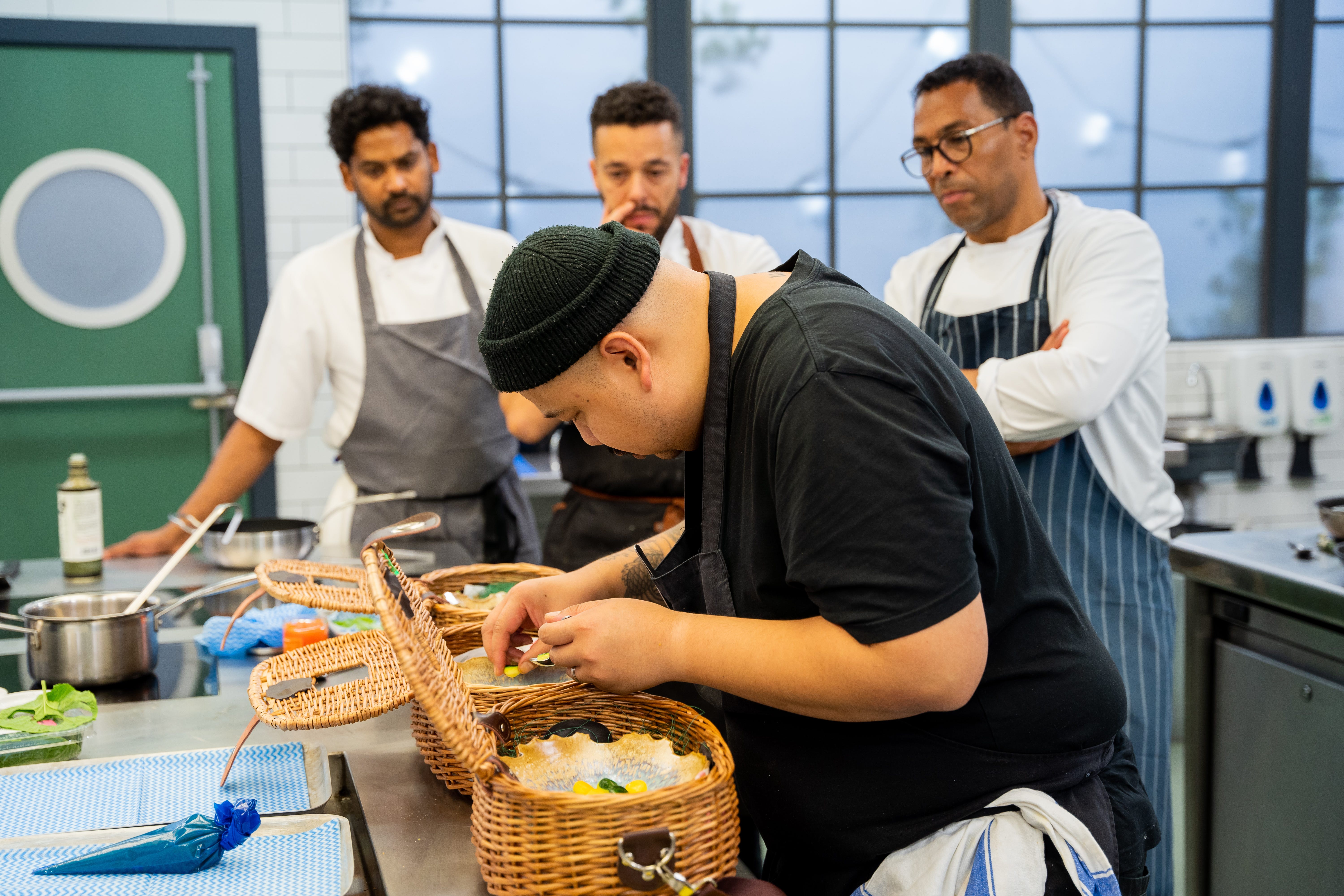
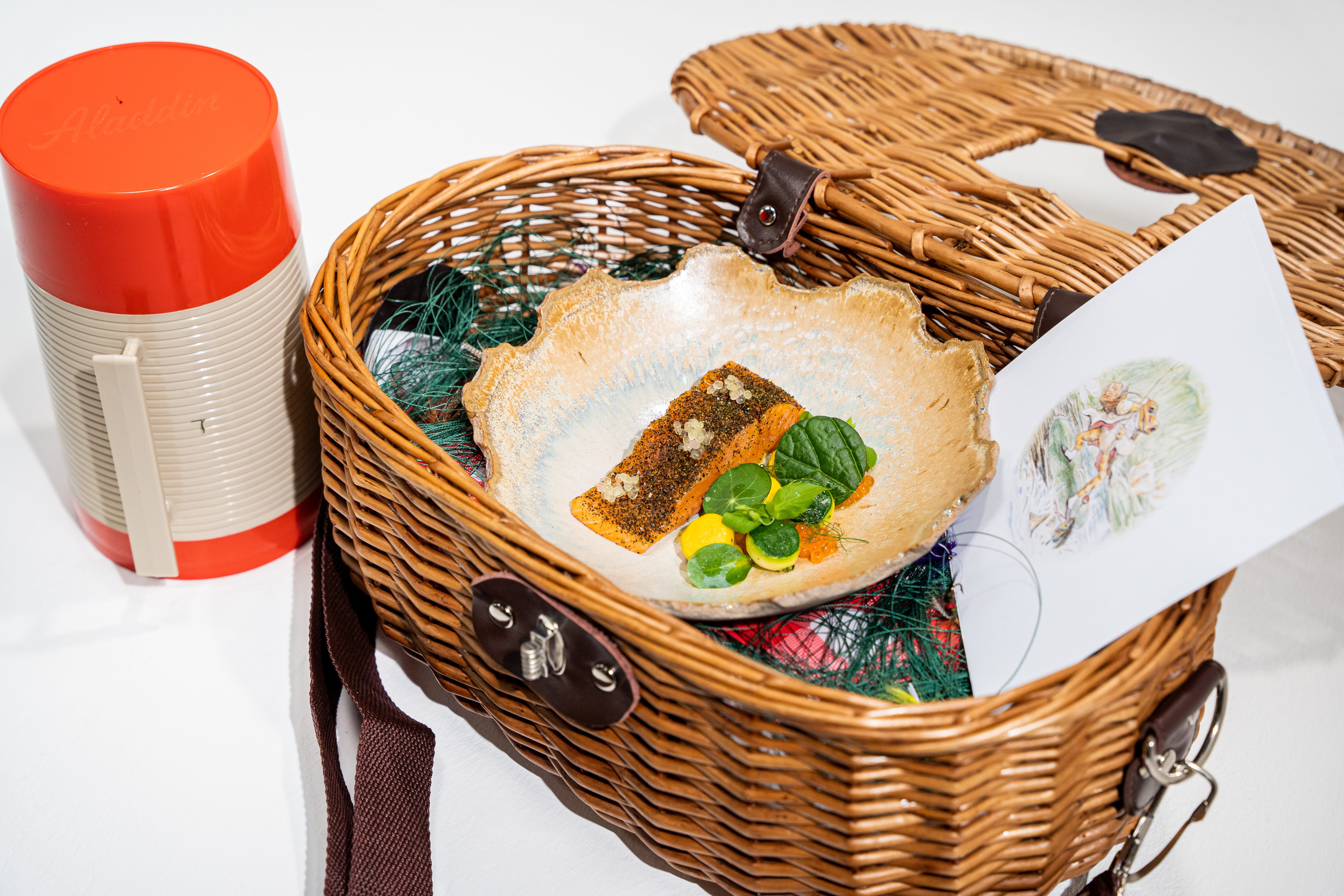
Looking back, I can see how much of that pressure was self-imposed.
Nobody from the Philippines had appointed me.
Nobody was waiting to revoke my membership card.
Yet there was still a voice in the back of my head asking questions.
Is this respectful?
Is this fair?
Am I oversimplifying something?
Am I doing justice to where this came from?
For years, I thought that was simply part of the job.
Maybe it was.
But lately I’ve started wondering whether many of us are still operating within a framework built for a different moment.
Because the Filipino food landscape today is very different from the one that existed when Sarap began.
Filipino and Filipino-led restaurants have earned Michelin recognition abroad.
Filipino chefs have received international acclaim.
Filipino cookbooks are being published by major publishers.
Filipino ingredients are becoming increasingly visible.
Consider ube.
When I first started speaking publicly about Filipino food, ube was still largely confined to Filipino bakeries, family kitchens, and specialist shops.
Today it appears everywhere.
Ice cream.
Doughnuts.
Croissants.
Lattes.
Supermarket shelves.
Marketing campaigns.
Trend reports.
For many consumers, ube has become immediately recognisable in a way that would have seemed unlikely a generation ago.
That visibility is not insignificant.
It represents decades of migration, entrepreneurship, and cultural exchange.
Nor is ube the only example.
Filipino brands such as Jollibee continue their global expansion, introducing Filipino cultural references and familiar flavours to audiences far beyond the diaspora communities that first sustained them.
Restaurants such as Donia in London have earned Bib Gourmand recognition, while Belly has received Michelin Guide recognition in its own right. Across Europe, it increasingly feels less far-fetched to imagine a Filipino restaurant earning a Michelin star.
In the United States, Kasama has become one of the most celebrated Filipino restaurants in the world.
In the Philippines, Michelin’s arrival marks another milestone in the country’s growing culinary visibility.
At the same time, Filipino chefs, writers, and creatives are increasingly shaping conversations that extend far beyond Filipino food itself.
Viewed individually, each development may appear modest.
Viewed together, they begin to look less like a moment and more like momentum.
Yet despite all of this, we continue speaking about Filipino food as though it remains permanently on the verge of discovery.
Filipino food is having a moment.
Filipino food is emerging.
Filipino food is finally getting the recognition it deserves.
We’ve been hearing variations of these statements for years.
In truth, we’ve been hearing them for far longer than many people realise.
Long before Michelin arrived in Manila.
Long before ube lattes appeared on supermarket shelves.
Long before Filipino food became a fixture of trend forecasts and think pieces.
Filipino food has been steadily expanding its presence through migration, community building, and entrepreneurship for decades.
Anthony Bourdain famously called Filipino food the next big thing in 2017.
Yet even then, he was describing a movement already underway rather than creating one from scratch.
The foundations had been laid years earlier by restaurateurs, home cooks, community organisers, and families carrying recipes across oceans and generations.
Which makes me wonder whether the language of discovery has outlived its usefulness.
How many times can something be discovered before we acknowledge it has been here all along?
At some point I started wondering whether the problem wasn’t Filipino food.
Perhaps the problem is the framework through which we continue to view it.
Because if a cuisine has been having a moment for over a decade, perhaps it is time to stop calling it a moment.
Perhaps it has simply become part of the landscape.
Filipino food occupies a strange position.
It is simultaneously visible and underrepresented.
Established and emerging.
Recognised and overlooked.
Filipino brands can expand across continents while journalists continue writing as though Filipino food has yet to arrive.
Ube can become a mainstream trend while many traditional Filipino dishes remain unknown outside our communities.
A cuisine can become visible without being fully understood.
But perhaps there is something else at work too.
For generations, Filipinos have been conditioned to seek validation from elsewhere.
Colonialism leaves many scars.
Political.
Economic.
Cultural.
Psychological.
Perhaps one of its most enduring legacies is not that it taught us to seek recognition from outside voices.
Perhaps it taught us to distrust our own success when it arrives.
Perhaps that is why we keep describing Filipino food as emerging long after the evidence suggests otherwise.
Success does not mean the work is finished.
It does not mean Filipino food is suddenly understood everywhere.
It does not mean the playing field is equal.
But recognising progress and acknowledging unfinished work are not mutually exclusive.
I don’t ask that dismissively.
There are still enormous challenges ahead.
Filipino cuisine remains underrepresented relative to the size of the Filipino diaspora.
There is still work to be done.
Stories to tell.
Restaurants to build.
Histories to document.
But perhaps the next challenge is not recognition.
Perhaps the next challenge is believing what the evidence already suggests.
That Filipino food belongs.
That it has belonged for quite some time.
That we no longer need to spend all our energy proving our worth before we begin creating.
The more I think about it, the more I wonder whether the next chapter is less about representation and more about expression.
Representation remains important.
There will always be value in history, context, attribution, and understanding.
But perhaps representation no longer needs to be the starting point for every conversation.
Perhaps Filipino chefs no longer need to spend so much energy explaining themselves.
Perhaps every dish doesn’t need to carry the weight of educating an audience.
Perhaps we can trust that the foundations have already been laid.
Not perfectly.
Not completely.
But sufficiently enough that something else can begin.
Creation.
Contribution.
Expression.
The ability to build upon what previous generations worked so hard to establish.
The irony is that Filipino cuisine itself has always understood this.
Our food is the product of movement.
Migration.
Trade.
Adaptation.
Exchange.
It has never been static.
It has never existed in a sealed container untouched by the world around it.
Why should our approach to it be any different?
Maybe the next chapter of Filipino food is not about convincing people of its worth.
Maybe it is about assuming that worth from the outset.
Maybe it is about allowing ourselves to create from a place of confidence rather than caution.
Not abandoning tradition.
Not ignoring history.
Not becoming careless.
But recognising that respect and freedom are not opposites.
The chefs, writers, restaurateurs, and communities who came before us worked tirelessly to create space for Filipino food in conversations where it was often absent.
We owe them a great deal.
But perhaps the best way to honour that work is not to remain forever in a state of introduction.
Perhaps it is to do something with the space they created.
Because the question is no longer whether Filipino food deserves a place at the table.
The question is what we choose to build now that it has one.
Perhaps the clearest sign that Filipino food’s moment has passed will be the day we stop talking about the moment altogether.
The day Filipino chefs are no longer expected to explain themselves before they create.
The day a Filipino dish can simply be a dish.
The day expression becomes more interesting than representation.
Not because representation failed.
But because it succeeded.
And perhaps the greatest mistake we can make now is continuing to act as though we’re still waiting for permission.
I wonder—when should we (in general) shift the mindset? I suppose asking for visibility for so long has meant it seems to be the only thing we know how to do. We get stuck with 'uy Pilipins!'